
About the Symposium
The 2026 Ohio Civics Centers Symposium brings together centers at Ohio universities that are dedicated to civic education. The symposium serves as a platform for these centers to collaborate, share research, and develop innovative approaches to fostering informed and engaged citizens.
Agenda
8:15 a.m.: Breakfast
9 a.m.: Opening remarks
Welcome and overview by Chase Center Executive Director Lee Strang
9:10 a.m. Panel 1: Futures
What will universities of the future look like? What kinds of curricula will they be positioned to provide?
Panelists
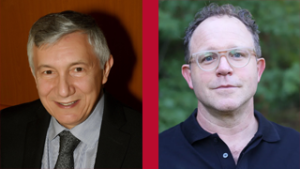
Steven Mintz is a prize-winning teacher and author; a leading authority on families, children, and the life course; and a pioneer in the application of new technologies to education, Steven Mintz is professor of history at the University of Texas at Austin and the author and editor of 17 books, including most recently The Learning-Centered University: Making College a More Developmental, Transformational, and Equitable Experience and The American Child: The Transformation of Childhood Since World War II (with Peter N. Stearns). A recipient of the 2025 AAC&U President’s Award for contributions to the humanities, he has taught at Columbia University, Harvard University Extension, Oberlin College, Pepperdine University, the University of Houston, and Germany’s Universitat-Siegen, and directed the University of Texas System’s Institute for Transformational Leraning. He has also served as president of H-Net: Humanities and Social Sciences Online and the Society for the History of Children and Youth, chaired the Council on Contemporary Families, and been a visiting scholar at Harvard and fellow at Stanford.
Chad Wellmon is the Commonwealth Professor of English and German at the University of Virginia, where he also has an appointment in history. He teaches and writes about European intellectual history, the history of knowledge and technology, universities, and social theory. He studied political theory at Davidson College and did his graduate work at UC Berkeley.
Supplemental Readings
Steven Mintz, “What Will the University of the Future Look Like?” Chronicle of Higher Education (March 2026)
Chad Wellmon, After the University: Higher Education and the Future of Intellectual Work (Johns Hopkins University Press, June 2026)
10:10 a.m.: Break
10:20 a.m.: Panel 2: Curricula
How can large public institutions bridge interests ranging from Engineering to the Liberal Arts? Can civic education create common ground?
Panelists
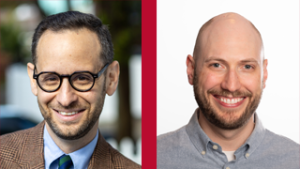
Samuel Goldman is an associate professor of humanities in the Hamilton School for Civic and Classical Education at the University of Florida. He has published two books: After Nationalism: Being American in a Divided Age (UPenn, 2021) and God’s Country: Christian Zionism in America (UPenn, 2018). His next book, a study of conservative critics of higher education, will appear with Basic Books. In addition to academic work, Goldman’s writing has appeared in The New York Times, The Wall Street Journal, and many other publications.
Erhardt Graeff is an associate professor of social and computer science at Franklin W. Olin College of Engineering, with affiliations at the SNF Agora Institute at Johns Hopkins and the Edmond & Lily Safra Center for Ethics at Harvard. With a PhD from the MIT Media Lab, he researches ethics and responsibility in engineering, civic learning, and the design of technologies for democratic participation, with a current focus on civic and character education in STEM.
Supplemental Readings
Samuel Goldman, “The Myth of Civic Education” and “Why Universities Keep Losing the Argument”
Erhardt Graef, “Civic Virtue Among Engineers” and “Using Civic Professionalism to Frame Ethical and Social Responsibility in Engineering”
11:20 a.m.: Break
11:30 a.m.: Panel 3: Challenges
What are higher education’s most pressing challenges, and what are the likely solutions?
Panelists
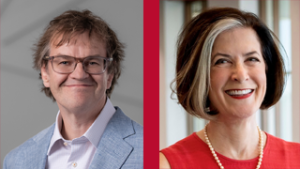
Michael Clune: Prior to joining the Chase Center, Michael Clune was the Samuel B. and Virginia C. Knight Professor of Humanities at Case Western Reserve University. Clune is the recipient of fellowships from the Guggenheim and Mellon foundations. Clune earned his undergraduate degree from Oberlin College, master’s from Johns Hopkins University, and a PhD in English and American literature from Johns Hopkins University. Clune is a writer and scholar of American literature. His most recent academic book is A Defense of Judgement (U of Chicago Press, 2021); his new novel, Pan, was published by Penguin in Summer 2025. His books have appeared on “Best of the Year” lists from The New Yorker, NPR, and elsewhere.
Hollis Robbins is professor of English at the University of Utah, where she was dean of humanities from 2022-2024. Previously, she was dean of arts & humanities at Sonoma State University (2018-2022) and director of Africana studies at Johns Hopkins University (2014-2017). She writes and speaks regularly on the role of university leaders in ensuring academic freedom and free speech on campus, as well as on AI’s growing challenges to the current structure of higher education. Robbins holds a PhD in English from Princeton University; an M.P.P. from Harvard’s Kennedy School of Government; and a B.A. from Johns Hopkins University. Robbins is finishing her seventh book, a study of the poet Robert Hayden, for Penguin’s Significations series.
Supplemental Readings
Michael Clune, “Left and Right Agree: Higher Education Needs to Change” and “Colleges Are Preparing to Self-Lobotomize”
Hollis Robbins, “The Rumsfeld Matrix” and “College Bankruptcies are Coming”
12:30 p.m.: Break
12:45 p.m.: Keynote and lunch
Teaching the History of Ideas: Equality Before Egalitarianism
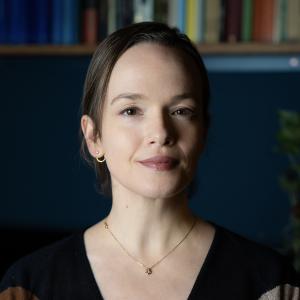
Teresa Bejan's keynote address will illuminate new pathways for teaching the historical ideas, texts, and traditions that have shaped the American constitutional order and society by speaking about her forthcoming book, First Among Equals: Visions of Equality Before Egalitarianism (Harvard University Press).
1:45 p.m.: Break
2 p.m.: Panel 4: AI
What are the challenges Artificial Intelligence poses to teaching, research, and civic life? How should universities respond?
Panelists
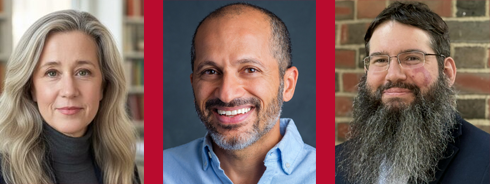
Katherine Elkins is a professor, director of the Integrated Program in Humane Studies, and founding co-director of the AI CoLab at Kenyon College. She serves as PI representing the Modern Language Association in the NIST AI Safety Institute Consortium. Her research examines AI safety, governance, and the social implications of emerging technologies, drawing on computational social science, narrative analysis, and philosophy. Her work includes one of the first ethical audits of large language models and early comparative work on global AI regulation. She is co-PI on a Schmidt Sciences grant for AI-driven cultural heritage preservation.
Michael Inzlicht is a professor of psychology at the University of Toronto and a research lead at the Schwartz Reisman Institute for Technology and Society. Recognized as among the top 1% of most-cited psychologists in the world for four consecutive years, his research sits at the intersection of motivation, self-control, and technology. His recent work asks whether AI can express empathy more effectively than humans, and whether opposition to AI is fundamentally moral, making it largely immune to evidence with real consequences for policy and adoption. He earned his PhD from Brown University.
Sean Westwood is an associate professor of government at Dartmouth College and director of the Polarization Research Lab. His research focuses on political behavior, public opinion, and artificial intelligence’s implications for democracy. He examines where partisan biases originate and how partisanship and elite cues shape citizen behavior, with expertise in survey methods and computational social science. His current work explores AI’s effects on political communication and opinion measurement. His research appears in PNAS, American Political Science Review, Nature Human Behavior, and AJPS, and has been covered by The New York Times, Washington Post, FoxNews, Wall Street Journal, and other major outlets.
Supplemental Readings
Katherine Elkins, “AI Comes for the Author” and “Where AI Meets the Humanities” (interview)
Michael Inzlicht, et al, “The Moralization of Artificial Intelligence” and "Against Frictionless AI"
Sean Westwood, “The Potential Existential Threat of Large Language Models to Online Survey Research” and “Measuring Perceived Slant in Large Language Models Through User Evaluation"
3:30 p.m.: Reception