What does it take to lead in a free society?
The answers aren’t found in a single discipline. They emerge at the intersection of history, law, politics, philosophy, literature, and economics — the same space where America’s constitutional tradition was forged and where Americans have learned to work together despite differences of expertise and opinion.
That's why a major or minor in Civics, Law, and Leadership is such a valuable approach to a meaningful and successful life and career.

The Bachelor of Arts in Civics, Law, and Leadership prepares students with the multidisciplinary education necessary for living a purposeful life of leadership. It is a great option as a first or second major, regardless of what your future career path and life aspirations may be.
The Bachelor of Arts in Civics, Law, and Leadership grounds students in the foundational ideas, texts, and traditions that have shaped American civic life and law. Students learn how citizens and legal experts have worked side by side to build and reshape the nation's institutions. And they develop the capacities that distinguish effective civic leaders: thinking critically across disciplines, communicating complex ideas clearly, and engaging unfamiliar arguments on their strongest terms before reaching conclusions. Importantly, courses across the major challenge students to apply their newly acquired knowledge and skills to contemporary problems.
This isn't a program about memorizing history. It's preparation for making it — whether students go on to law school, public service, nonprofit leadership, business, ministry, or graduate study in any field that demands clear thinking about how we govern ourselves and live together.
Where to start?
Read more about the major below. Have questions? Feel free to schedule a meeting with our advisor, Kari Swygart. She is happy to help!
About the Civics, Law, and Leadership major
Benefits
Future-proof your career
AI-resilient skills: While automation transforms technical tasks, this degree delivers high-level social, communication, and decision-making skills.
The ideal double major: With only 33 required credit hours, our highly flexible curriculum allows you to seamlessly pair civics with STEM, business, or other degrees to maximize your value.
Elite professional preparation: Acquire the analytical, written, and rhetorical skills required to excel in law school and leadership roles across any sector.
Transformative experiences
Close-knit community: Benefit from small class sizes, direct mentorship from world-class faculty, and the vibrant peer network of the Chase Society.
Global horizons: Participate in life-changing Global Education programs at Oxford University or France, learning to think critically in the world's most revered intellectual environments.
Generous financial support
Earn up to $12,000: Our current competition will award winners $4,000 per year for 3 years.
Other opportunities: We run merit- and need-based scholarship competitions throughout the year, so we encourage students to check our scholarship page frequently.
What students experience in this major
Set a foundation by exploring the ideas that shaped America
Build knowledge and wisdom through deep reading of America’s foundational texts and great books that provide insights into our institutions, culture, and society.
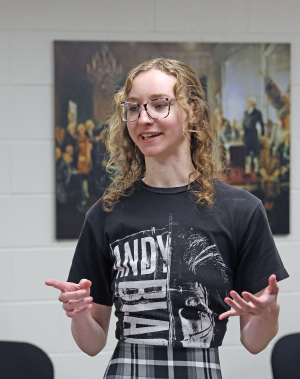
Survey key topics in American Civic Life, Law, and Leadership, reflecting on your own perspectives
Compare your experiences and assumptions with the wisdom of great traditions, historical examples, and insights from the sciences, developing a deeper and more thoughtful understanding of the world.
Specialize, research, argue, and communicate with confidence
Build strong arguments about civic and constitutional issues using evidence from across fields—and present ideas clearly in writing, speaking, and visual formats while engaging fairly with opposing viewpoints.
Apply big ideas to real-world challenges
Use insights from multiple disciplines to better understand today’s issues, draw lessons from the past, and think about practical, principled ways to lead and make a difference in a diverse society.
Grow as an ethical and effective leader
Develop the judgment, communication skills, and sense of responsibility needed to lead in civic, professional, and legal settings, and to contribute thoughtfully to public life and pursue leadership roles in law, government, and related fields.
Required coursework
There are numerous ways to customize this major. Only four specific classes (outlined below in Part 1 and Part 4) are required. Each student selects their seven additional courses based on the options described in Part 2 and Part 3.
Part 1: Set foundation — Two required courses (6 credit hours)
All students start with two foundational courses that serve as an introduction to many of the central concepts of American civics:
- CIVICLL 2000: Can We Rule Ourselves?
- CIVICLL 2130: America’s Foundational Debates
Part 2: Survey — Three courses (9 credit hours)
Students then take one course in each of the three areas listed below to survey each of the core components of the major. The courses students select depend on their academic interests and career aspirations. A list of courses meeting these requirements can be found lower on this page under "Courses."
- Civic Life
- American Constitutionalism
- Leadership
Part 3: Specialize — Two courses (6 credit hours)
This is where students truly begin homing in on the areas of civics, law, and leadership that most reflect their interests and aspirations. They take two more courses in one of the areas below. A list of courses meeting these requirements can be found lower on this page under "Courses."
For example, future lawyers may want to focus on American Constitutionalism, while business-minded students may prefer leadership courses. Our Chase Center student advisor can help you chart a path that works for your individual needs!
- Civic Life
- American Constitutionalism
- Leadership
Part 4: Apply — Two required courses (6 credit hours) plus two electives (6 credit hours)
- CIVICLL 4000: Solving Civic Problems (teaches students how to choose the best disciplinary tool (legal, economic, or political) to address a specific problem)
- CIVICLL 4800: Capstone Experience (A collaborative, project-based exit experience)
- Electives: Students choose two electives from any number of Chase Center courses in the curricular map or from courses in numerous other Colleges at The Ohio State University. Other courses may be submitted for approval by students for consideration and accepted at the discretion of the CIVICLL program director.
Notes
- One course from each GE Theme may overlap with major coursework.
- Only three credit hours may be taken in x193 courses.
- At least 21 hours must be in 3xxx or higher-level courses.
- Students may take up to two courses (6 credit hours) in approved non-CIVICLL courses to fulfill their degree requirements.

Applicable Courses
Civic Life
Courses examining the principles and practices that enable Americans to transcend differences and work constructively within a pluralistic republic.
Courses eligible for Civic Life credits. Chase Center courses are listed as CIVICLL.
ARTSSCI 2400: Conversations on Morality, Politics, and Society (3) / ARTSSCI 2400 (H)
CIVICLL 2200: The Pursuit of Happiness: An American Tradition (3)
CIVICLL 2210: Freedom and Equality in American Literature (3) / CIVICLL 2210E (Embedded Honors)
CIVICLL 2230 Capitalism and Its Critics: An Intellectual History (3)
CIVICLL 2250: The Soul and the City: The Battle Over Human Nature (3)
CIVICLL 2300: Civic Friendship and Dialogue in American Democracy (3)
CIVICLL 3212: Christianity, Government, and the Law (3) / CIVICLL 3212E (Embedded Honors)
CIVICLL 3215: Science, Health, and the Good Life (3) / CIVICLL 3215E (Embedded Honors)
CIVICLL 3220: The Great American Novel (3)
CIVICLL 3250: Love and Friendship (3)
CIVICLL 3300: How Politics Breaks Your Brain (3) / CIVICLL 3300E (Embedded Honors)
CIVICLL 3305: Truth versus Post-Truth in Civic Life (3)
CIVICLL 3310: American Religion(s): Fractures and Foundations (3)
CIVICLL 3320: Toleration and Its Discontents (3)
CIVICLL 3325 Pluralism and Its Problems (3)
CIVICLL 3330: American Witch-Hunts, Then and Now (3)
CIVICLL 3335 Holy Buckeye! Football and American Civic Religion (3)
CIVICLL 3340: Science Fiction and Civic Life (3)
CIVICLL 3345 States of Nature: The Nature of State Building in the United States and Western Europe, 1776-1945 (3)
CIVICLL 3350: How the World Became Rich (3)
CIVICLL 3335 Markets and Morality in Public Policy Problems (3)
CLAS 2206: Politics and Political Thought in the Ancient World (3)
CLAS 3210: Classics and African American Political Thought (3)
CLAS 3302: Citizenship in Democratic Athens (3)
CLAS 3224: Citizenship and Subjects of Rome: Empire, Slavery, and Law (3)
CLAS 4501: The Good Life: Ancient Ethical Philosophy (3)
ENGLISH 2276: Arts of Persuasion (3)
ENGLISH 3379: Methods for the Study of Writing, Rhetoric and Literacy (3)
ESPHE 5440: Philosophical Perspectives on Race, Education, and Citizenship (3)
GEOG 3750: Geography of North America (3)
HISTORY 2272: Reacting to the Past: Citizenship in Historical Context (3)
HISTORY 2703: History of Public Health, Medicine, and Disease (3)
HISTORY 3030: History of Ohio (3)
HISTORY 3560: Citizenship and American Military History: 1607–1902 (3)
HISTORY 3561: Citizenship and American Military History: 1902 to the Present (3)
HISTORY 3678: Applied Public History: Museum Pasts, Practices, and Challenges (3)
PHILOS 3210: History of Ancient Philosophy (3)
POLITSC 2150: Voters and Elections (3)
POLITSC 3780: Data Literacy and Data Visualization (3)
POLITSC 4125: American State Politics (3)
POLITSC 5411: Justice, Sin and Virtue: Ancient & Medieval Thought (3)
POLITSC 5412: Life, Liberty, and Property: Early Modern Political Thought (3)
POLITSC 5413: Democracy, Equality & Revolution: 19th Century Political Thought (3)
POLITSC 5414: Liberalism, Totalitarianism, and Empire: 20th Century Political Thought (3)
PUBAFRS 2120: Public Service and Civic Engagement (3)
RELSTDS 3672: Native American Religions (3)
American Constitutionalism
Courses that dive into the constitutional principles, legal codes, and judicial debates that structure American political, private, and professional life.
Courses eligible for American Constitutionalism credits. Chase Center courses are listed as CIVICLL.
AEDECON 3170: Agribusiness Law (3)
CIVICLL 2410 Citizenship on Trial: Legal Battles Over American Belonging (3)
CIVICLL 2420: The Evolution of Citizenship (3)
CIVICLL 3430: Law & Economics (3)
CIVICLL 3450: State Constitutional Law (3)
CIVICLL 3480: Technology and American Democracy: An Inquiry Through History and Law (3)
CIVICLL 4450: The Ohio Constitution (3)
CIVICLL 5420: Originalism and Its Discontents (3)
COMM 3404: Media Law and Ethics (3)
INTSTDS 4242: Incomplete Democracies: the (Un)Rule of Law in Latin America (3)
INTSTDS 5800: International Law (3)
LAW 4030: Introduction to the American Legal System (3)
LAW 4035: Understanding Jurisprudence: An Introduction to Legal Theory (3)
PHILOS 3410: Philosophical Problems in the Law (3)
POLITSC 4130: Law and Politics (3)
POLITSC 4135: American Constitutional Law (3)
POLITSC 4136: Civil Liberties (3)
PSYCH 4485: Psychology and the Law (3)
PUBAFRS 3210: Civics, the Making of Law, and the Development and Implementation of Public Policy (4)
PUBAFRS 3220: Citizenship in the Age of AI: Law, Technology, and Social Justice (3)
PUBAFRS 4510: Law and Public Affairs (3)
PUBAFRS 5506: Administration of Criminal Justice Policy (3)
SOCIOL 4509: Sociology of Law (3)
SOCWORK 5015: Social Work and the Law (3)
Leadership
Courses analyzing how individuals make decisions under pressure, manage uncertainty, set goals, hold themselves accountable, learn through trial and error, and motivate citizens around a shared vision.
Courses eligible for Leadership credits. Chase Center courses are listed as CIVICLL.
ARTEDUC 5671: Organizational Leadership in the Nonprofit Arts (3)
BUSHMHR 2210: Personal Leadership and Team Effectiveness (3) / BUSHMHR 2210 (H)
BUSHMHR 3211: Leadership and Character (3)
CIVICLL 2500: From Data to Decisions: When Numbers Can (and Can’t) Solve Policy Problems (3)
CIVICLL 3500: The Art of Statesmanship (3)
CIVICLL 3550: Presidential Crises in War & Peace (3)
CIVICLL 3560: Profiles in American Leadership (3)
CIVICLL 3570: Thinking Well, Leading Well (3)
CIVICLL 3580: Dietrich Bonhoeffer: Leadership and Discipleship (3)
COMLDR 3530: Foundations of Personal and Professional Leadership (3) / COMLDR 3530E (Embedded Honors)
ESHESA 2572: Introduction to Leadership Development in Learning Organizations (3)
ESHESA 3573: Theories of Leadership in Learning Organizations (3)
HISTORY 3676: Leadership in History (3)
PHILOS 2390: Ethics and Leadership in a Diverse World (3)
PHYSICS 2100: Physics and Technology for Future Presidents (4)
POLITSC 3450: Ethics and Public Policy (3)
POLITSC 3912: Political Leadership (3)
PSYCH 3522: Organizational Psychology (3)
PSYCH 3900: A Practical Guide to Ruling the World (3)
PUBAFRS 2130: Leadership in the Public and Nonprofit Sectors (3)
The specialized emphasis the Chase Center places on law, leadership, and American civics adds unique value to any career and post-graduate studies that students pursue. By gaining the knowledge and civic virtues necessary to help people live well in all of life’s callings and be leaders within our republic, the CIVICLL minor opens doors to opportunities in business, law, politics, religion, medicine, education, STEM, and many other fields.
That's why many students are adding our minor in Civics, Law, and Leadership to their existing academic plan!
Requirements
Credit hours: 15 credits.
- 6 credit hours from two core courses (CIVICLL 2000, plus one from CIVICLL 2110, 2120, and 2130)
- 9 credit hours from three elective courses (one course in American Constitutionalism, one in American Leadership, and one course in “The Good Life” or “The Civic Life”). Six of these credits must be 3000-level or higher.
- You must pass all courses with a grade of C-minus or higher.
- Only three hours may be taken in x193 courses.